

Civil Engineering
Civil Engineering is one of the oldest and broadest branches of engineering that deals with the planning, design, construction, and maintenance of infrastructure and public works. It plays a vital role in the development of society by providing essential facilities such as buildings, roads, bridges, dams, airports, water supply systems, and transportation networks.
Civil Engineering offers wide career opportunities and contributes significantly to economic growth and societal development. The increasing demand for infrastructure, transportation, housing, and sustainable development ensures a promising future for Civil Engineers in both public and private sectors.
Vision
“To be a recognized leader in civil engineering education and innovation, shaping resilient and sustainable infrastructure designing and planning solutions that enhances the quality of life and contributes to the progress of society.”
Mission
“To equip students with the knowledge and skills necessary to design, construct, and maintain sustainable and resilient infrastructure through:
- Comprehensive Curriculum: Providing a solid foundation in structural engineering, geotechnical engineering, transportation engineering, environmental engineering, and construction management.
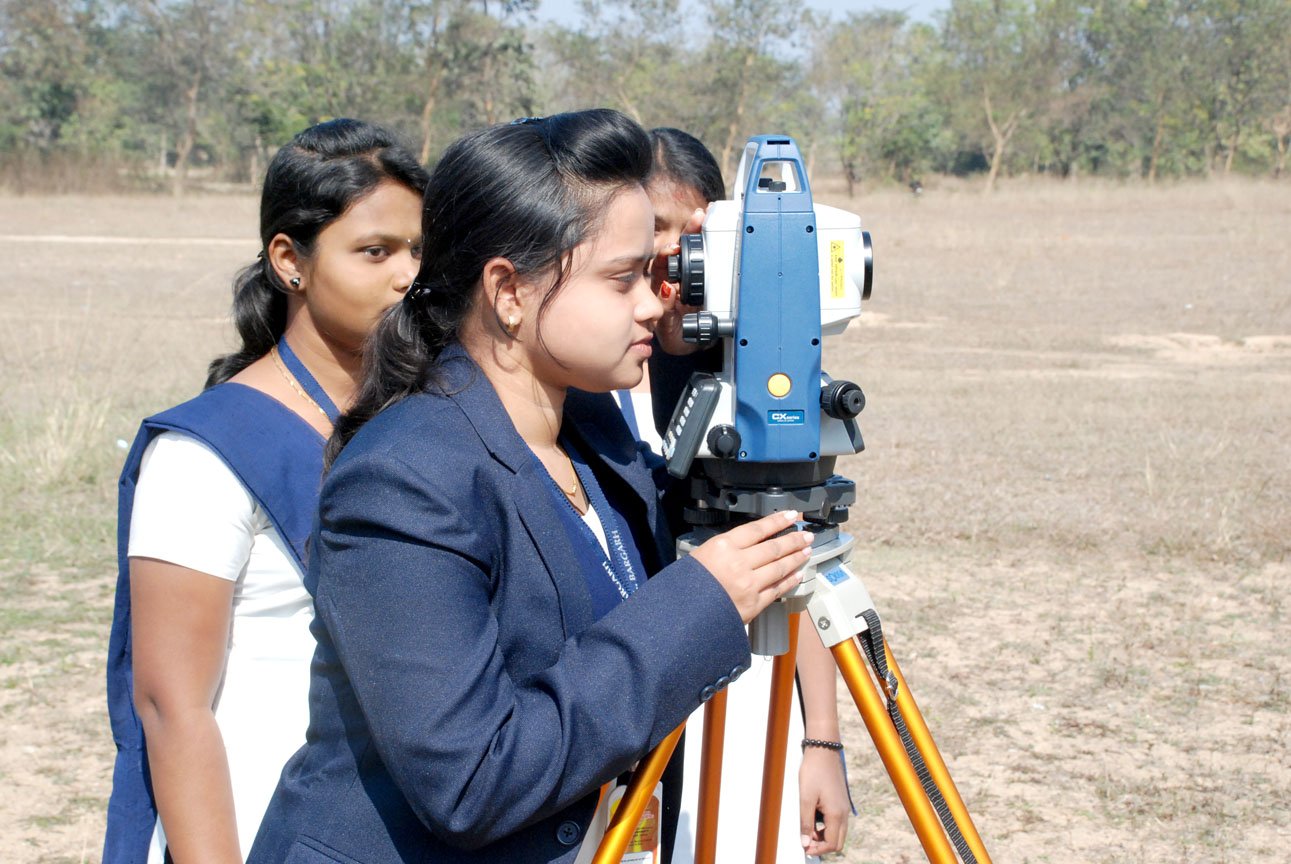
- Practical Application: Emphasizing hands-on learning through laboratory experiments, field surveys, design projects, and industry internships.
- Research and Innovation: Fostering a culture of research and innovation, encouraging students to explore new materials, technologies, and methodologies.
- Industry Collaboration: Building strong partnerships with construction companies, consulting firms, and government agencies to provide students with real-world experience and career opportunities.
- Ethical and Sustainable Practices: Promoting ethical conduct, environmental awareness, and sustainable development principles in all aspects of civil engineering practice.”
Program Educational Objectives (PEOs) – Civil Engineering
- Graduates will apply fundamental knowledge of Civil Engineering to design, analyze, and solve real-world engineering problems in structural, environmental, transportation, geotechnical, and water resource engineering.
- Graduates will establish successful careers in industry, government organizations, higher education, research, and entrepreneurship through technical competence and professional skills.
- Graduates will demonstrate leadership, teamwork, ethical values, communication skills, and commitment towards sustainable development and societal welfare.
- Graduates will engage in lifelong learning and adapt to emerging technologies, modern engineering tools, and evolving professional practices in Civil Engineering.
- Graduates will contribute effectively to infrastructure development, environmental protection, and innovative engineering solutions at regional, national, and global levels.
Program Specific Outcomes (PSOs) – Civil Engineering
- Apply the principles of Civil Engineering for analysis, design, construction, and maintenance of structures, transportation systems, water resources, and environmental engineering projects.
- Use modern engineering tools, software, and construction techniques for planning, surveying, structural analysis, estimation, project management, and sustainable infrastructure development.
- Demonstrate professional and ethical responsibility in solving real-life civil engineering problems related to public health, safety, environment, and societal needs.
- Develop innovative and sustainable solutions in areas such as smart infrastructure, green buildings, disaster management, and environmental protection.
- Enhance technical competence through lifelong learning, research, interdisciplinary collaboration, and adaptation to emerging technologies in Civil Engineering.
Program Outcomes (POs) – B.Tech in Civil Engineering
| PO No. | Program Outcomes (POs) | Description |
|---|---|---|
|
PO1 |
Engineering Knowledge |
Apply the knowledge of mathematics, science, and Civil Engineering fundamentals to solve complex engineering problems. |
|
PO2 |
Problem Analysis |
Identify, formulate, review research literature, and analyze complex civil engineering problems using principles of mathematics, science, and engineering. |
|
PO3 |
Design/Development of Solutions |
Design solutions for complex civil engineering problems considering public health, safety, and environmental sustainability. |
|
PO4 |
Conduct Investigations of Complex Problems |
Use research-based knowledge, experiments, analysis, and interpretation of data to provide valid conclusions. |
|
PO5 |
Modern Tool Usage |
Apply appropriate techniques, resources, and modern engineering and IT tools for civil engineering applications. |
|
PO6 |
The Engineer and Society |
Assess societal, health, safety, legal, and cultural issues relevant to professional engineering practice. |
|
PO7 |
Environment and Sustainability |
Understand the environmental impact of engineering solutions and apply sustainable development practices. |
|
PO8 |
Ethics |
Apply ethical principles and professional responsibilities in engineering practice. |
|
PO9 |
Individual and Team Work |
Function effectively as an individual and as a member or leader in multidisciplinary teams. |
|
PO10 |
Communication |
Communicate effectively through reports, presentations, technical documents, and professional discussions. |
|
PO11 |
Project Management and Finance |
Apply engineering management principles and financial practices in project management. |
|
PO12 |
Life-long Learning |
Engage in independent and lifelong learning to adapt to technological and professional changes. |
Civil Engineering Course Eligibility
- Completion of Class 12th or equivalent with Physics, Chemistry, and Mathematics (PCM).
- A minimum of 50% aggregate marks in the qualifying examination (relaxation for reserved categories as per government norms).
- Qualification in JEE Main or state-level engineering entrance examination.